
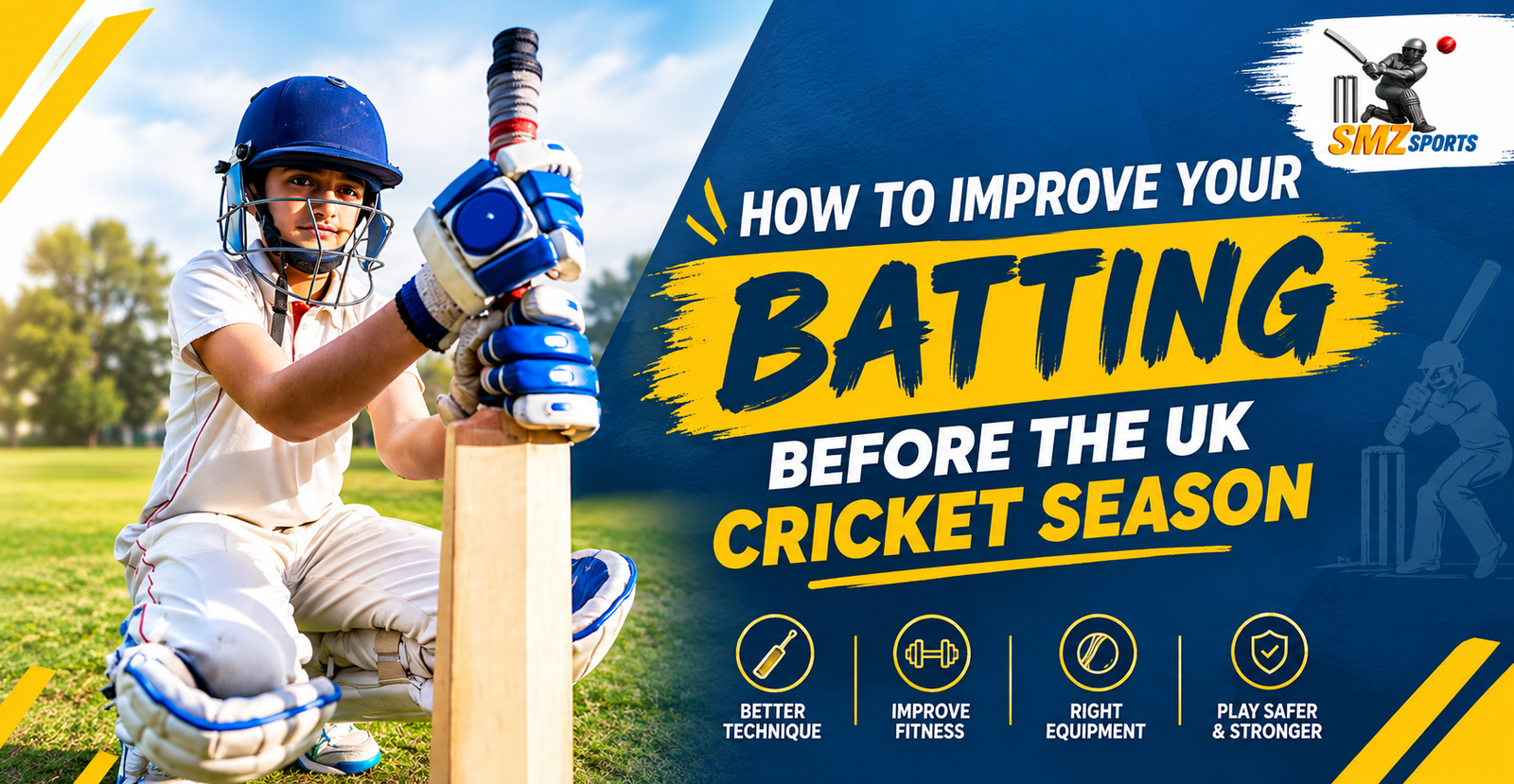
Getting ready for the UK cricket season is about more than simply buying a new bat. Good batting comes from a combination of technique, fitness, practice, confidence, and the right cricket equipment.
Whether you’re a beginner preparing for club cricket, a junior player moving up an age group, or an experienced batter looking to perform consistently, the weeks before the season are the perfect time to improve your game.
From choosing the right cricket bat and cricket gloves to maintaining your equipment with proper bat care, this guide covers practical ways to prepare for the season.
1. Start With Your Batting Technique
Before investing in new equipment, assess your basic technique.
Focus on:
- A balanced batting stance
- Head position over the ball
- Watching the ball closely
- Correct front-foot and back-foot movement
- Keeping your hands relaxed
- Playing straight when appropriate
- Maintaining balance after each shot
Beginners should concentrate on consistency rather than trying to hit every ball aggressively. Advanced players can use pre-season sessions to work specifically on weaknesses such as short-ball play, movement against swing bowling or scoring against spin.
Pro Tip: Record a few net sessions from the side. Reviewing your stance, footwork and shot selection can reveal technical issues that are difficult to notice while batting.
2. Choose the Right Cricket Bat
Your bat can influence your confidence, timing and overall batting experience. However, the best cricket bat isn’t necessarily the most expensive one.
The right bat should suit your:
- Height and age
- Playing level
- Batting style
- Preferred weight
- Handle preference
- Budget
- Playing conditions
If you’re searching for cricket bats online, don’t choose purely based on brand or appearance. Pay attention to specifications such as weight, profile, willow grade, handle construction and pickup.
English Willow vs Kashmir Willow Bat
Two common options for cricket players are an english willow bat and a kashmir willow bat.
| Feature | English Willow Bat | Kashmir Willow Bat |
|---|---|---|
| Willow | English willow | Kashmir willow |
| Performance | Excellent rebound and responsiveness | Good performance for recreational and developing players |
| Typical use | Competitive/club cricket | Beginners, juniors and recreational cricket |
| Price | Generally higher | Generally more affordable |
| Feel | Lightweight pickup and responsive feel can be excellent | Solid and dependable |
| Best suited for | Serious and advanced players | Beginners and developing players |
If you’re playing competitive club cricket in the UK, an English willow option may be worth considering. For juniors or players developing their fundamentals, a good Kashmir willow bat can provide excellent value.
Popular Cricket Bat Options
When shopping for a new bat, you may come across brands and models such as:
- sg bat and sg cricket bat
- ss bat and ss cricket bat
- dsc cricket bat
- gm cricket bat and gm bats
- gray nicolls bat / gray nicolls cricket bat
- grey nicolls bat
- kookaburra cricket bat and kookaburra bats
- mrf bat / mrf cricket bat
- new balance cricket bat
- ton cricket bat
- harrow cricket bat
- elevar bat
The important thing is to select a specification that matches your playing requirements rather than choosing a brand simply because it is popular.
3. Practice Against UK-Style Conditions
One of the biggest challenges for batters is adapting to conditions.
Before the season, include different types of bowling in your practice:
- Swing bowling
- Seam movement
- Short-pitched bowling
- Spin
- Slower balls
- Different bowling speeds
Ask your practice partner to vary the line and length rather than bowling the same delivery repeatedly.
Expert Advice: Spend some sessions focusing purely on leaving the ball. Learning which deliveries to leave can be just as valuable as learning which balls to attack.
4. Improve Your Footwork
Good footwork gives you more time to play your shots.
Try these simple drills:
Front-foot drill
Have a partner feed full-length balls while you concentrate on getting your front foot towards the ball.
Back-foot drill
Practise moving quickly onto the back foot against shorter deliveries.
Movement drill
Start from your normal stance and react to randomly fed balls. Move forward, backward or across depending on the length.
For juniors, keep drills simple and focus on balance rather than complicated movements.
5. Build Your Batting Fitness
Batting requires concentration as well as physical endurance.
Include:
- Short sprint intervals
- Agility drills
- Core exercises
- Leg-strength exercises
- Mobility work
- Hand and forearm strengthening
- Reaction drills
Running between wickets should also be practised. A batter who can turn ones into twos can create additional scoring opportunities without taking unnecessary risks.
6. Don’t Ignore Your Cricket Gloves
Your cricket gloves are an important part of your protection and comfort.
When choosing gloves, check:
- Finger protection
- Palm grip
- Fit around the fingers
- Wrist support
- Flexibility
- Ventilation
Gloves should feel secure without restricting your movement.
If you’re preparing a cricket complete kit, don’t leave gloves until the last minute. Give yourself time to practise in them before competitive matches.
7. Choose the Right Cricket Pads
Good cricket pads should provide protection without making movement uncomfortable.
Look for:
- Correct leg length
- Comfortable straps
- Adequate knee protection
- Good side protection
- Lightweight construction
- Secure fit
Your cricket batting pads should sit comfortably around the knee and shin without sliding during movement.
For younger players, properly fitted junior cricket pads are especially important. Parents should avoid buying significantly oversized equipment simply so the child can “grow into it.” Poorly fitting protective equipment can affect both comfort and movement.
8. Select the Right Helmet
A properly fitted helmet is essential when facing hard cricket balls.
For younger players, a junior cricket helmet should be specifically suited to their head size rather than simply being a smaller-looking version of an adult helmet.
Check:
- Correct head fit
- Secure adjustment
- Comfortable chin strap
- Appropriate face protection
- No excessive movement when the player moves
Safety Tip: Replace protective equipment when it becomes damaged, excessively worn or no longer fits correctly.
9. Prepare Your Cricket Bat Before Match Day
Buying a bat is only the beginning. Proper bat care can help maintain its condition.
Depending on the bat and manufacturer’s instructions, pre-season preparation may include:
- Checking the bat for damage
- Using an appropriate bat cover
- Inspecting the edges and toe
- Keeping the bat dry
- Avoiding unnecessary exposure to moisture
- Using suitable protection where recommended
- Following the manufacturer’s knocking-in guidance
Never assume every bat requires exactly the same preparation. Always follow the manufacturer’s recommendations.
10. Check Your Cricket Bat Grips
Your cricket bat grips affect comfort and control.
A grip that is too worn can become slippery, while an unsuitable grip can affect how comfortably you hold the bat.
Replace the grip if it is:
- Torn
- Slippery
- Excessively worn
- Loose
- Uncomfortable
A fresh grip can also make an older bat feel more comfortable in the hands.
11. Build a Complete Pre-Season Cricket Kit
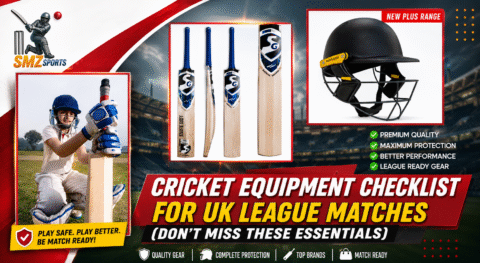
Instead of focusing only on the bat, create a complete equipment checklist.
A typical cricket kit for adults may include:
- Cricket bat
- Cricket batting pads
- Cricket gloves
- Helmet
- Abdominal protection
- Thigh protection
- Arm protection
- Cricket shoes
- Kit bag
- Bat cover
- Training clothing
A cricket complete kit can be convenient for players who are starting from scratch.
For younger players, a junior cricket kit can include appropriately sized:
- Junior cricket bat
- Junior cricket pads
- Junior cricket helmet
- Junior gloves
- Shoes
- Kit bag
Parents should always prioritise correct sizing and protection over buying the biggest available set.
Cricket Equipment Checklist
| Equipment | Beginner | Junior | Advanced |
|---|---|---|---|
| Cricket bat | ✓ | ✓ | ✓ |
| Cricket gloves | ✓ | ✓ | ✓ |
| Cricket pads | ✓ | ✓ | ✓ |
| Helmet | ✓ | ✓ | ✓ |
| Kit bag | ✓ | ✓ | ✓ |
| Bat protection | Recommended | Recommended | Recommended |
| Specialist protection | As required | As required | As required |
12. Don’t Forget Your Kit Bag
A good kit bag keeps your equipment organised and protected.
Depending on how much equipment you carry, consider:
- Cricket-specific compartments
- Separate shoe storage
- Bat compartments
- Ventilated sections
- Strong zips
- Comfortable carrying straps
Products such as a kookaburra cricket bag, tech kit bag or gym kit bag can suit different storage requirements.
Choose capacity based on the amount of equipment you actually carry rather than buying the largest bag available.
13. What About Tennis Cricket?
Not every player trains with a leather ball.
If you’re practising with tennis balls, consider equipment designed for that style of cricket.
Options include:
- tennis cricket bat
- tennis ball cricket bat
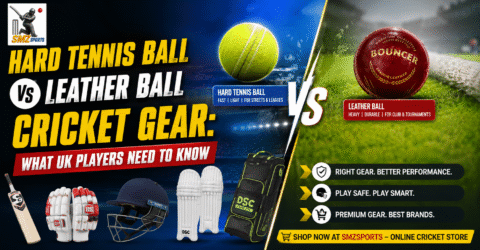
- hard tennis cricket bat
- Plastic cricket bat
- Training cricket sets
A tennis-ball session can be useful for improving hand-eye coordination and reaction speed. However, it should complement rather than completely replace practice against the type of ball you’ll face in competitive matches.
14. A Simple 4-Week Pre-Season Batting Plan
If the season is approaching, you can structure your preparation like this:
Week 1 – Technique
Focus on:
- Stance
- Balance
- Head position
- Straight-bat shots
- Basic footwork
Week 2 – Movement
Add:
- Front-foot drills
- Back-foot drills
- Running between wickets
- Reaction exercises
Week 3 – Match Scenarios
Practise:
- New-ball situations
- Short balls
- Spin
- Running singles
- Chasing targets
Week 4 – Match Simulation
Combine everything.
Play longer practice innings and work on:
- Shot selection
- Concentration
- Strike rotation
- Building an innings
- Responding to different bowling strategies
Pro Tip: Don’t spend every net session trying to hit sixes. Match-winning batting often comes from leaving well, rotating the strike and selecting the right balls to attack.
15. Buying Cricket Equipment Online: What to Check
If you’re planning to buy cricket bat or other equipment online, check the product details carefully.
Before ordering, look at:
- Product size
- Bat weight
- Willow type
- Player age/height recommendations
- Protection level
- Brand specifications
- Return/exchange policy
- Product images
- Available sizes
If you’re searching for a cricket bat near me or a cricket bat shop near me, compare the available specifications rather than buying purely based on proximity.
For online shoppers, a reliable online cricket store should make product specifications and sizing information easy to understand.
16. Don’t Forget Your Other Sports Equipment
Many players participate in multiple sports during the off-season.
If you’re also playing badminton, you may need:
- badminton kit
- badmintonnet
- badminton nets
- feather shuttlecock
- Rackets
- Appropriate footwear
Cross-training can also provide useful movement, coordination and reaction exercises that complement cricket training.
Final Pre-Season Batting Checklist
Before the first UK cricket match, make sure you have:
- ✓ Practised your batting technique
- ✓ Worked on front-foot and back-foot movement
- ✓ Faced different bowling styles
- ✓ Improved fitness and running
- ✓ Selected the right cricket bat
- ✓ Checked your cricket gloves
- ✓ Checked your cricket batting pads
- ✓ Tested your helmet
- ✓ Replaced worn cricket bat grips
- ✓ Completed necessary bat care
- ✓ Organised your kit bag
- ✓ Practised realistic match situations
Shop Cricket Equipment at SMZSports
Preparing for the UK cricket season starts with the right combination of practice, preparation and equipment.
Whether you’re looking for an english willow bat, kashmir willow bat, junior cricket bat, sg cricket bat, ss bat, gm bats, kookaburra bats, mrf cricket bat, gray nicolls cricket bat, dsc cricket bat, ton cricket bat, protective equipment or a complete cricket kit, choosing equipment that matches your age, ability and playing style is essential.
At SMZSports, you can explore premium cricket equipment and badminton gear through our online store, with options for beginners, juniors, club players and experienced cricketers.
Looking to upgrade your gear before the season? Explore SMZSports today and find the right equipment for your next innings.
SMZSports – Online Cricket Store | Cricket Bats Online | Cricket Equipment & Badminton Gear